Pan Masala Pouch Packaging Without Aluminium: Role of Barrier Coating
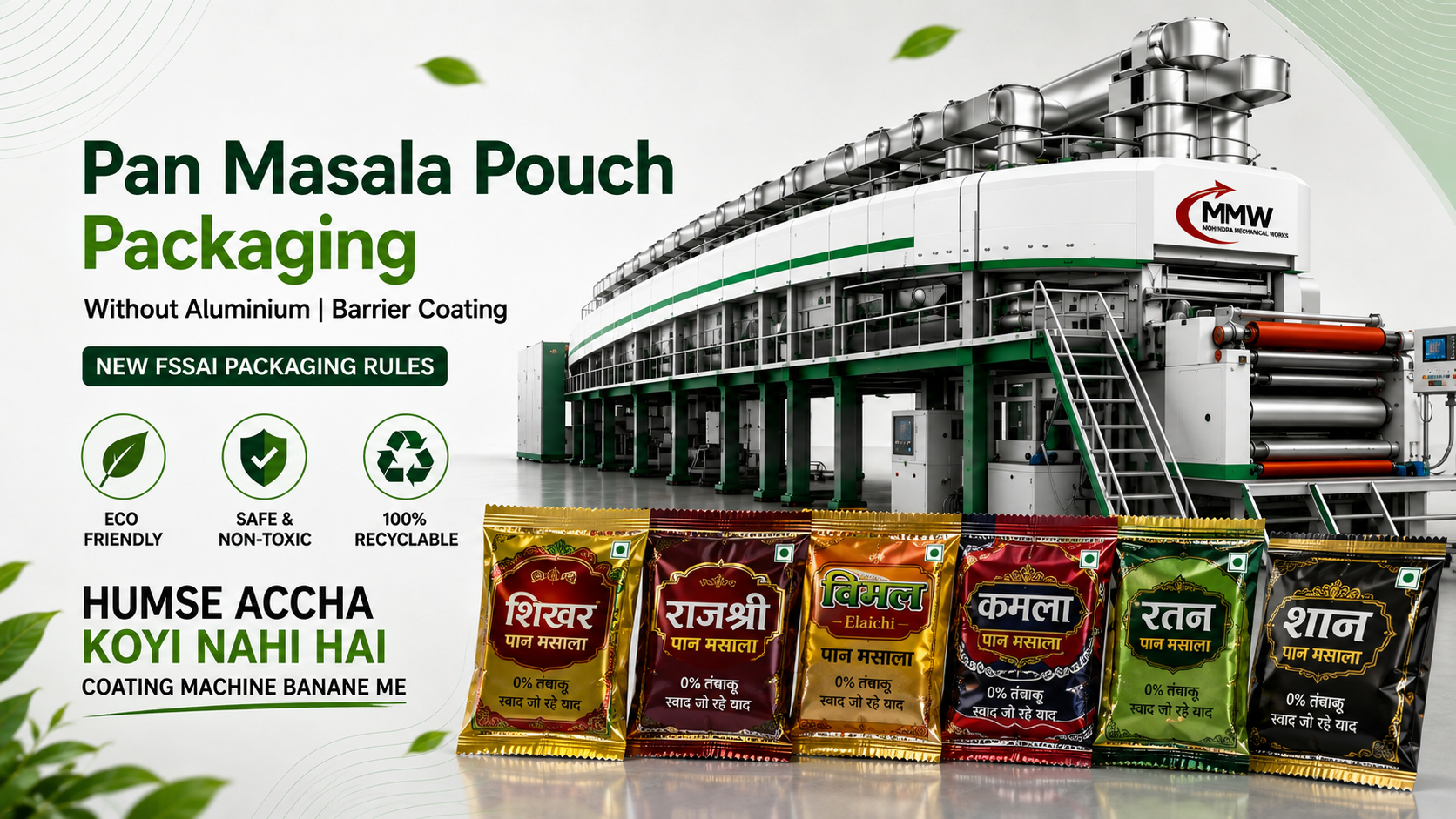
The pan masala packaging industry is going through an important change as regulatory developments are encouraging manufacturers to look for alternative packaging materials. With increasing attention on plastic, aluminium foil and metallised packaging structures, paper-based packaging solutions are gaining interest among manufacturers and packaging converters.
However, replacing aluminium with ordinary paper is not enough. Pan masala packaging requires suitable protection against moisture and external conditions while also maintaining good printability, strength and pouch performance.
This is where barrier coating technology becomes important.
Why Is Aluminium-Free Pan Masala Packaging Important?
Aluminium foil and metallised layers have traditionally been used in flexible packaging because they can provide strong barrier properties. However, regulatory changes and the growing demand for more sustainable packaging are encouraging manufacturers to evaluate alternative materials.
Recent reports regarding new FSSAI requirements for pan masala packaging have brought additional attention to the use of permitted paper-based packaging structures.
For manufacturers, this means there is a need to explore packaging solutions that can provide the required functionality without depending on conventional aluminium-based structures.
Can Paper Replace Aluminium in Pan Masala Packaging?
Paper can be an important component of alternative packaging structures, but untreated paper may not provide all the properties required for a pouch.
Paper can be sensitive to moisture and may require a suitable functional coating to improve its performance.
A properly selected barrier coating can create a protective layer over the paper surface. Depending on the formulation, this coating may help improve resistance to moisture, grease and other external factors.
The final packaging performance will depend on the paper grade, coating formulation, coating weight, converting process and complete pouch structure.
What Is Barrier Coating?
Barrier coating is a functional layer applied to a substrate such as paper to improve specific performance characteristics.
For pan masala pouch applications, a suitable coating may help provide improved resistance against moisture and other environmental conditions.
The coating is applied continuously over the paper web using a coating machine. After application, the coated paper passes through a controlled drying system before being rewound into rolls.
These coated rolls can then be further processed through printing, slitting and pouch-making operations.
Role of a Pan Masala Pouch Coating Machine
A Pan Masala Pouch Coating Machine plays an important role in producing consistently coated paper for pouch applications.
The machine applies the selected coating across the paper web at a controlled rate. Consistent coating is important because uneven coating can affect barrier performance and create problems during downstream printing and converting.
A modern roll-to-roll coating system can help manufacturers control:
-
Coating thickness
-
Coating weight
-
Web tension
-
Drying temperature
-
Production speed
-
Rewinding
-
Overall coating uniformity
This level of control becomes especially important when manufacturers are developing new paper-based packaging structures.
Benefits of Barrier-Coated Paper
1. Improved Moisture Resistance
Depending on the coating formulation, barrier-coated paper can provide improved resistance to moisture compared with untreated paper.
This can be important for products that need protection from environmental humidity.
2. Development of Aluminium-Free Structures
Barrier coating technology allows manufacturers to explore paper-based packaging structures without relying on aluminium foil or metallised layers, where technically and legally suitable.
3. Better Surface Performance
A suitable coating can improve the surface characteristics of paper and make it more suitable for subsequent printing or converting processes.
4. Continuous Production
Roll-to-roll coating allows manufacturers to process large paper rolls continuously, helping improve production efficiency.
5. Flexible Coating Options
Different coating methods and formulations can be considered depending on the required barrier properties, paper grade and production requirements.
Why Coating Uniformity Matters
One of the most important factors in coated-paper production is uniformity.
If the coating is too thin, the required performance may not be achieved. If it is too thick, material consumption can increase and drying or converting problems may occur.
A properly configured coating machine helps maintain controlled coating application throughout the paper roll.
This can result in more consistent coated material for printing and pouch conversion.
Mohindra Engineering Company Pan Masala Pouch Coating Machine
Mohindra Engineering Company manufactures a Pan Masala Pouch Coating Machine designed for roll-to-roll coating applications.
The machine can be configured for different coating requirements and supports coating methods such as Air Knife, Reverse Gravure and Comma Coating, depending on the machine configuration.
The listed machine can operate at speeds of up to 150 MPM, while paper GSM, coating weight, coating width and drying requirements can be selected according to the application.
The system is designed to help manufacturers produce consistently coated paper rolls for further processing.
For companies exploring aluminium-free or paper-based pan masala pouch structures, this type of coating equipment can provide an effective platform for testing and scaling suitable coating solutions.
What Should Manufacturers Consider Before Switching?
Moving from aluminium-based packaging to coated paper requires proper technical evaluation.
Manufacturers should consider:
-
Paper GSM and quality
-
Required barrier properties
-
Coating formulation
-
Coating weight
-
Drying requirements
-
Printing compatibility
-
Pouch-making performance
-
Sealing requirements
-
Food-contact compliance
-
Applicable FSSAI requirements
The complete packaging structure should be tested before commercial production.
A coating machine is only one part of the overall solution. The final packaging must be designed and validated according to the product requirements and applicable regulations.
Future of Aluminium-Free Pan Masala Packaging
The shift towards alternative packaging materials can create new opportunities for paper manufacturers, coating companies and packaging converters.
Barrier coating technology can help transform ordinary paper into a more functional substrate for specialised packaging applications.
As manufacturers respond to changing regulatory requirements, the demand for efficient and consistent paper coating systems may continue to grow.
The combination of suitable paper, approved coating formulations and advanced coating machinery can help the industry explore new packaging structures with reduced dependence on conventional aluminium-based materials.
Conclusion
The move towards pan masala pouch packaging without aluminium is creating a need for new material and coating technologies. Barrier coating can improve the functional performance of paper and make it more suitable for selected pouch applications.
A reliable Pan Masala Pouch Coating Machine can help manufacturers apply consistent coatings, control production parameters and produce coated paper rolls for further printing and pouch conversion.
Mohindra Engineering Company manufactures coating machinery for manufacturers and converters looking to develop modern paper-based packaging solutions.
Note: Packaging regulations and permitted materials can change. Manufacturers should verify the latest FSSAI requirements and conduct appropriate technical and compliance testing before commercial production.